Margaret Chen
Retired teacher
Ballarat
"I brought my grandmother's chair in with the seat fallen through. They told me honestly what needed doing, showed me the material, and delivered it back stronger than I remembered it being."
We hand weave natural bulrush and cattail into chair seats the old way. No synthetic substitutes. No shortcuts. Just honest work that holds weight for decades.
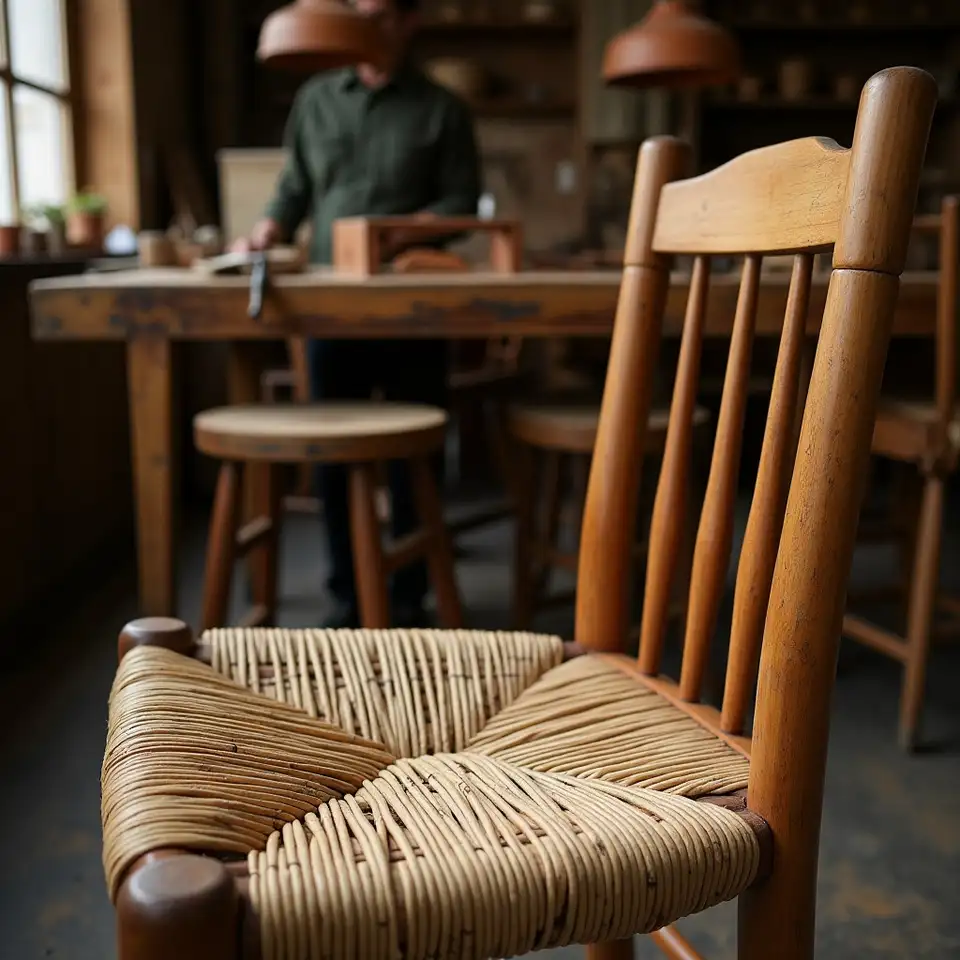
We have spent years learning how bulrush behaves when it is wet, when it is dry, and when it is pulled tight around a corner. That knowledge is not written down in any manual. It lives in the hands of the person doing the work.
Bulrush, cattail, and seagrass each have their own character. Some split if pulled too hard. Some stretch if soaked too long. We know which to use and how to treat it so the seat holds its shape through seasons of heat and humidity.
We never weave onto a loose frame. Every joint is tested and reglued if needed before the first strand goes in. A seat is only as strong as the wood it is tied to, and we treat the wood with the same respect as the weave.
We do not use templates or jigs. Each chair frame is slightly different, and the weave must adjust to those differences. We match the pattern to the proportions of the seat so it looks balanced from every angle.
A small selection of seats that came in broken and left ready for another generation.
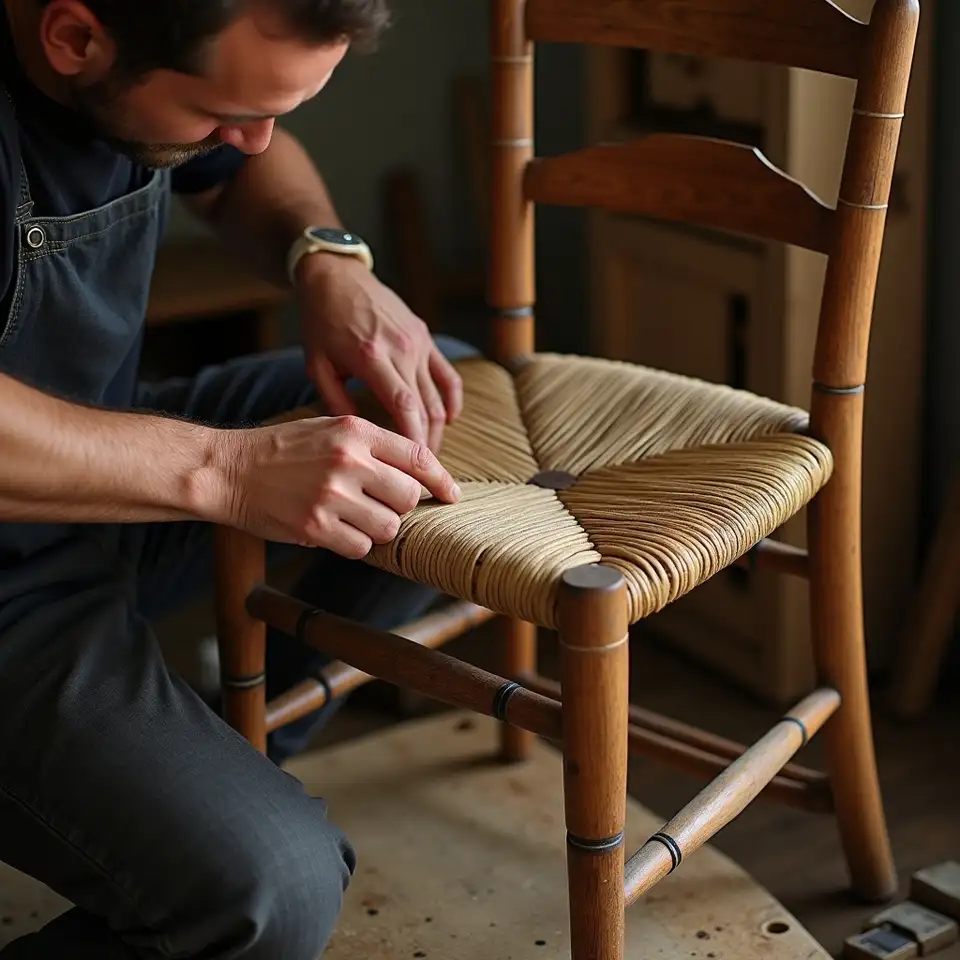
Kitchen chair revival
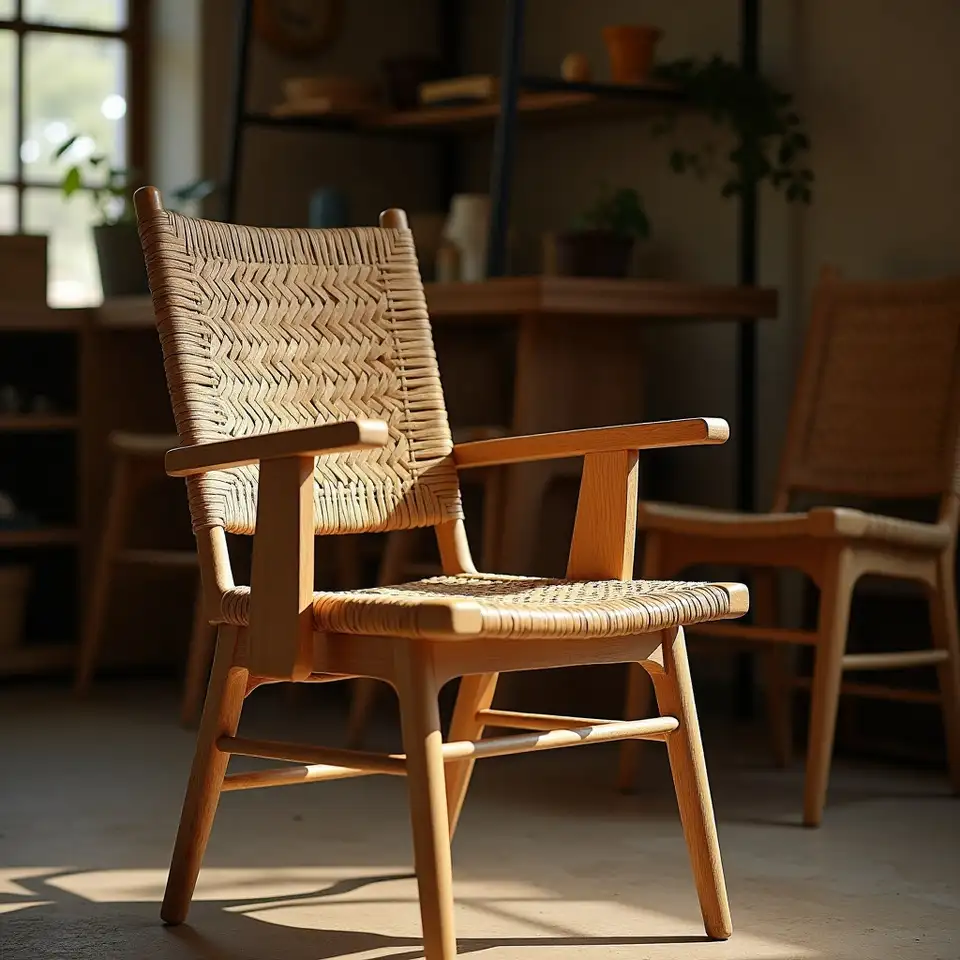
Herringbone dining seat
A single formal dining chair needed a seat that could hold up to daily use without looking industrial. We wove a herringbone pattern in cattail that tightened into a firm, level surface as it dried.
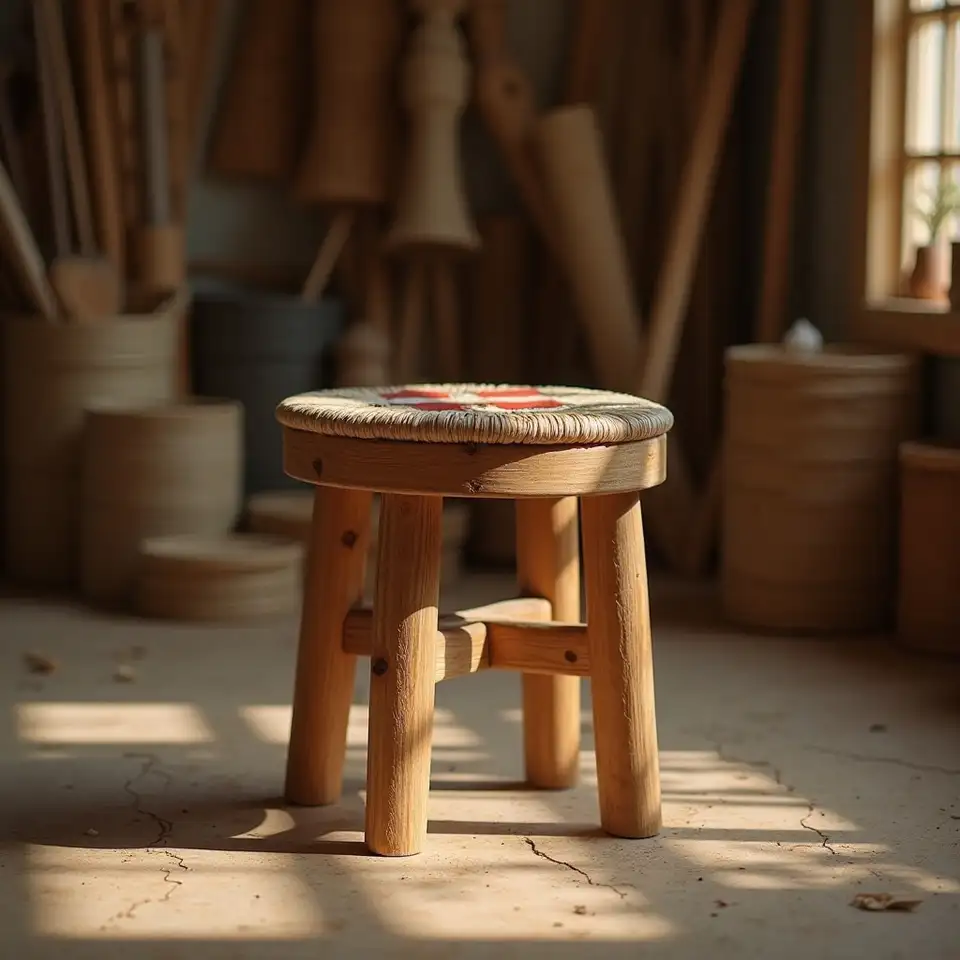
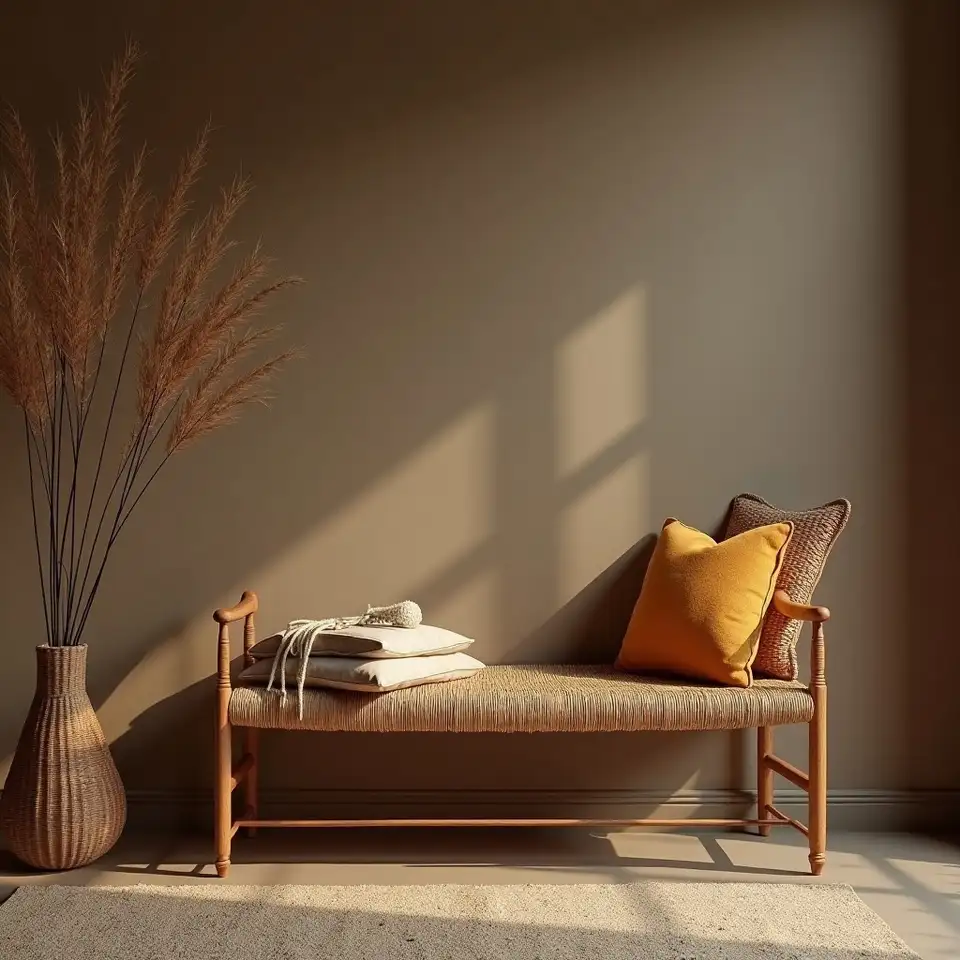
A local historical society sent us a courthouse bench from the 1890s with the seat half gone. We documented the original weave, sourced matching material, and rebuilt the seat to carry visitors for another century.
Word travels slowly in this trade. These are people who found us, sent a chair, and sat on the result.

Retired teacher
Ballarat
"I brought my grandmother's chair in with the seat fallen through. They told me honestly what needed doing, showed me the material, and delivered it back stronger than I remembered it being."

Cafe owner
Melbourne
"We had six bentwood chairs with the cane rotted out. They matched the weave to the originals and had them back before we reopened. The seats have held up to three years of daily use now."

Museum curator
Bendigo
"The historical society needed a delicate restoration on a bench that could not be replaced. They documented every step, used appropriate materials, and treated the piece with genuine respect for its age."

Home renovators
Daylesford
"We found four chairs at a market with the seats gone entirely. They helped us choose a weave that suited the style of our house, not just the chairs. Now they sit around our table every night."
No obligation. No sales pitch. Just an honest assessment of whether your chair is worth restoring and what method will suit it best. We reply within two working days.
Photograph the frame from above, the underside, and any remaining weave. Include a close-up of the joints if you can. The more we see, the better we can guide you.
Use the contact form or email. Tell us where you are, what you know about the chair's history, and what you want the finished seat to look like.
We will tell you if the frame is sound, what material suits the chair, how long the work will take, and what it will cost. You decide whether to proceed.
Every chair that leaves our workshop has been woven by one pair of hands from first strand to final knot. That continuity matters. Send us your chair and we will treat it like it belongs in our own kitchen.